Alien: Resurrection is often considered the weakest entry in the original Alien film "quadrilogy"-technically a tetralogy-yet it holds a peculiar place in the sci-fi canon for its wild ambition and unique directorial choices. Released in 1997 as a follow-up to the presumed finale of Alien 3, Resurrection brought back Sigourney Weaver’s Ellen Ripley in bold, unexpected ways while pushing the franchise into new directions that are both controversial and fascinating.
Director and Vision: Jeunet's Unconventional Approach
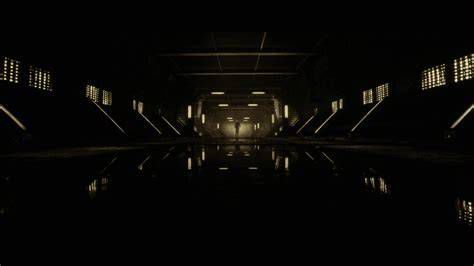
Jean-Pierre Jeunet, acclaimed for films such as Delicatessen, City of Lost Children, and Amélie, took the helm with Alien: Resurrection, marking his only American production. Jeunet’s French auteur sensibility shaped much of the film’s atmosphere, with grotesque imagery, sweeping camera work, and a revived focus on body horror haunting the scenes. Many of the film’s memorable elements-including the disturbing visuals of the failed Ripley clones and the underwater Xenomorph sequences-stem from his vision.
Jeunet was a natural odd fit for Hollywood’s rigid system, and his inability to speak English likely made the ambitious production even more challenging. Some positives, such as art direction and his willingness to experiment, are unmistakably Jeunet, but tonal inconsistencies and some unnaturally directed performances also bear his hallmark.
The Story: Resurrection and Reinvention
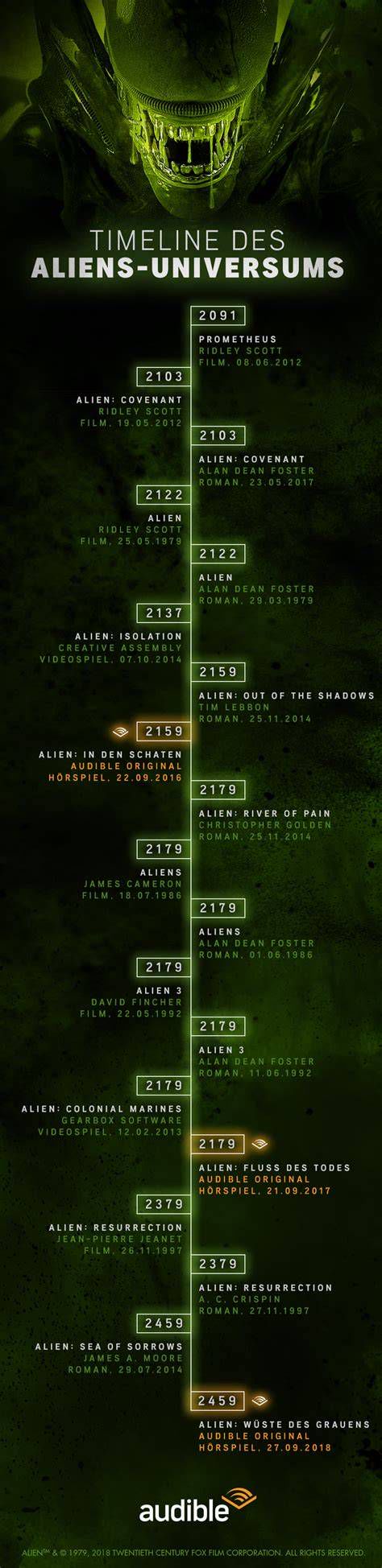
Alien: Resurrection takes place 200 years after Ellen Ripley sacrificed herself to prevent another alien outbreak. Scientists at the space station Auriga have successfully created a clone of Ripley-complete with an alien queen embryo inside her-intending to breed and militarize Xenomorph spawn. The decision to clone Ripley for alien breeding feels almost as questionable as the multiple attempts to revive dinosaurs in the Jurassic Park franchise; greed outweighs logic, but it provides a narrative vehicle for more alien chaos.
Ripley, now "Ripley 8," is neither fully human nor fully alien. This hybrid identity lets Sigourney Weaver craft a whole new version of her iconic character, mixing enigmatic, inhuman behaviors with echoes of her previous persona. Weaver’s performance, alternating between the alien and the familiar, stands out among the ensemble cast-even as her character is saddled with uneven dialogue and a sexually charged depiction that diverges from earlier heroism.
Cast and Characters: A Mixed Bag
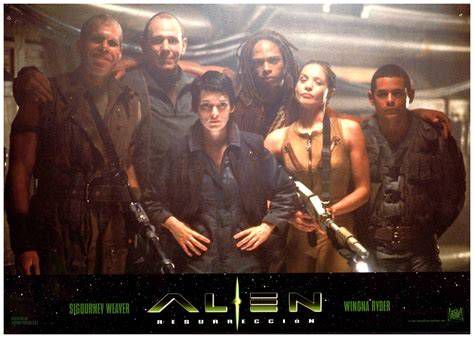
The film assembles a talented cast: Ron Perlman, Dan Hedaya, Winona Ryder, Gary Dourdan, Brad Dourif, Leland Orser, Dominique Pinon, and Michael Wincott. Unfortunately, these actors largely deliver hollow caricatures rather than fleshed-out personalities. Whedon’s script is filled with quippy humor and bad one-liners; most characters are one-dimensional, with few opportunities for depth.
Michael Wincott, playing the pirate captain Elgyn, is a highlight but is killed off early, denying him any real arc. Ron Perlman’s tough-guy Johner nearly steals the show, and Winona Ryder’s android Call is memorable if robotic. Even Weaver’s Ripley, iconic in past films, is reduced to a shadow of her former self. The basketball scene, a notorious example, demonstrates the movie’s avoidance of genuine character investment.
Writing: Whedon's Influence and Tonal Conflicts
Penned by Joss Whedon before his Avengers fame, the film is tonally conflicted due to the clash of creative voices. Whedon originally intended a clone of Newt (from Aliens) as the lead, but Weaver’s return forced a narrative shift. Whedon’s own criticism of the casting is partly justified-his script struggled within the constraints of Hollywood and Jeunet’s singular directing style.
Visuals and Production: Art Direction, Effects, and Design
Alien: Resurrection shines brightest in its art direction and set design. The detailed digital sets were impressive for their era, and the production design matched the series’ established aesthetic. The Xenomorphs look menacing, though they appear too often to retain suspense, and their over-designed viscera sometimes look drenched in excessive petroleum jelly.
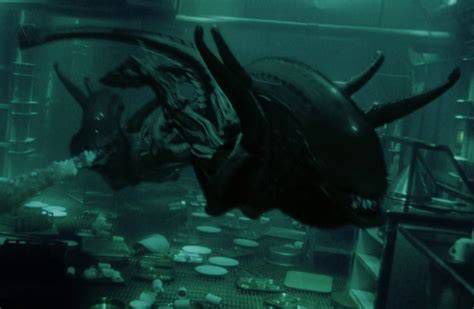
Jeunet’s Xenomorphs are more successful than those in Alien³, and the handful of CG moments aren’t as cringe-inducing as expected. The film pushes new boundaries with the aliens, highlighting their intelligence and cunning-particularly through their underwater escape and the brutal, clever method they use to break free from captivity.
| Element | Strengths | Weaknesses |
|---|---|---|
| Art Direction/Set Design | Impressive digital sets, unique aesthetic | Some over-designed elements |
| Xenomorph Appearance | Menacing, clever underwater scenes | Shown too often, viscera overdone |
| CGI and Visual Effects | Some novel moments | Frequently dated, distracts from suspense |
| "Newborn" Creature | Conceptually bold | Execution and design widely criticized |
Plot Highlights: Experimentation and Military Intrigue
A key strength of Resurrection is its depiction of military and scientific attempts to control and weaponize aliens. For the first time in the franchise, audiences see cages, experiments, and plans in action. After three movies where Ripley battled the idea of corporate exploitation, Resurrection visualizes this ambition-and, inevitably, the chaos that ensues when the aliens escape.
The movie’s most memorable sequence may be “They Swim,” where the Xenomorphs demonstrate their aquatic prowess. This underwater battle is ridiculous but undeniably fun, showing the franchise still has room for spectacle and innovation.
Final Act and The "Newborn"
The climax takes a wild swing-Ripley’s alien queen gives birth to a human/alien hybrid, dubbed "The Newborn." The creature’s design, featuring exaggerated facial emotions and a twitchy rabbit nose, has been widely derided, but the concept itself is imaginative, if under-discussed. The hybrid kills the queen and bonds with Ripley, eliciting mild pity as it is gruesomely sucked into space.
XENOMORFO RECIÉN NACIDO (Resurrección Alienígena) EXPLICADO
Reception and Reevaluation
Upon release, Alien: Resurrection was met with disappointment and was routinely ranked as the worst Alien movie. Expectations were low, especially following Alien 3. Yet, upon revisiting, some viewers found themselves smiling at its ambitious, entertaining approach. The film consistently surprises in its willingness to push the franchise in new directions, even if many ideas are more exciting than their execution.
The music by John Frizzell is a frantic, frizzled mess that fails to mesh with the ongoing action. The talented ensemble, though hollow, still provides flashes of entertainment, with Perlman and Wincott making standout, if brief, contributions.
Alien: Resurrection is a confused, tongue-in-cheek, big-budget B-movie, but not a total loss. Its artistic ambition, intriguing premise, and occasional moments of brilliance offer viewers reasons to reevaluate its place in the Alien franchise.
tags: #alien #resurreccion #ass