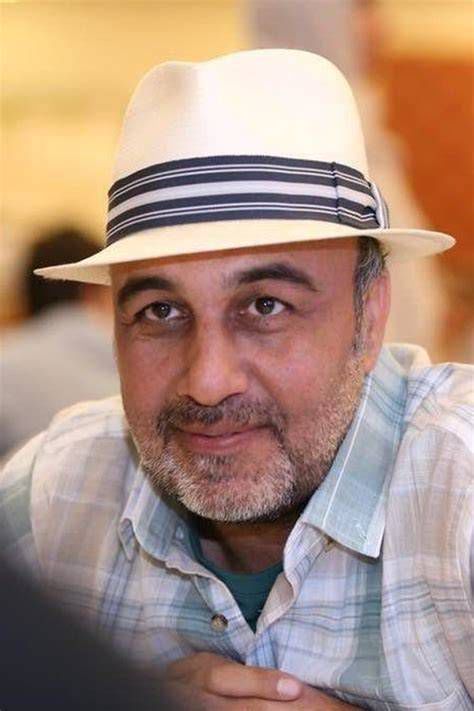
Reza Attaran (Persian: رضا عطاران; born 10 May 1968 in Mashhad) is an Iranian actor, director, screenwriter and singer. Originally from Kakhak, he earned a diploma in economics and pursued further studies in industrial design at the Faculty of Fine Arts, University of Tehran, but left to focus on a career in cinema. He has also lived in Sabzevar.
Early artistic path and emergence as a singer
Attaran’s career began with theater performances under Hassan Hamed in the 1980s. He started at the Children and Young Adults Intellectual Development Center. He joined the children’s section of Mashhad’s IRIB in 1982, appearing in the program Rainbow. His collaboration with Hamed continued until 1991.
Between 1997 and 2003 he started directing his own TV series where he achieved great recognition and fame for his singing skills. At that time he formed a music band called Dampaei (Slippers) together with Youssef Teimouri and other artists. Attaran’s first directorial work was the children’s television program Sib-e Khandeh (1997). That same year, he debuted in cinema with Key of Marriage.
Music within his television projects
In 1998, he acted, wrote, and directed Majid Delbandam alongside Majid Salehi and Yousuf Teymouri. In 1999, Attaran starred in, served as art director for, and wrote Qatar-e Abadi, a comedic series that parodied stories like Hassan Kachal, Scheherazade, and Robin Hood, incorporating social commentary. In 2002, Attaran acted, directed, and wrote for the comedy series Koucheh Aghaghia. The following year, he took on the same roles for Khaneh Be Doosh, a series with a simple storyline that addressed social issues like poverty, greed, and ignorance.
Despite his television success with series like Khaneh Be Doosh, Moteham Gorikht, Torsh o Shirin, and Bezangah earning him widespread popularity, Attaran parted ways with IRIB after facing restrictions. On 18 September 2008, the IRIB Oversight Council sent a letter to the organization’s management, citing public criticism and norm-breaking content, leading to the series’ suspension.
Integration of singing into film and stage persona
Attaran made his debut as a film director in 2011 with I Feel Sleepy (Khabam Miad). In 2011, Attaran directed and starred in the film Khabam Miad. The cast included Akbar Abdi, Merila Zarei, and Vishka Asayesh. The film premiered at the 30th Fajr Film Festival, where Attaran won the Crystal Simorgh for Best Director in the New Vision section. Film critic Manouchehr Akbarloo highlighted the film’s ability to connect with audiences as one of its strengths.
Attaran’s presence in both comedic and dramatic roles often included musical interludes or showcased his vocal abilities, contributing to his popular image as a performer who could engage audiences across media. "I wrote the screenplay for No Men Allowed with Reza Attaran in mind, and interestingly, he performed the role beyond the script. Reza Attaran can easily say no to many things, like a few collaborations with me!"
Songs, band work and public reception
At that time he formed a music band called Dampaei (Slippers) together with Youssef Teimouri and other artists. Without extensive formal discography listed in the provided material, Attaran’s musical activity is tied closely to his television and stage projects where his singing contributed to his fame. Vishka Asayesh remarked, “Without doing anything special, people are drawn to watching him.”
Attaran’s television series enjoy significant popularity among audiences. His charisma and ability to connect with viewers, including through music and musical sketches, is frequently cited by colleagues and critics as central to his appeal.
Notable intersections of music and major screen works
Throughout his prolific film career-roles in films like Tighzan, Quarantine, Khorus Jangi, Towfigh-e Ejbari, Tasvieh Hesab, Nish-e Zanbour, Bikhod o Bi Jahat, Che Khoobe Ke Bargashti, Dehliz, Tabaqe Hassas, Esterahat-e Motlagh, Red Carpet, Kalashnikov, Nahang-e Anbar and its sequel, Hezarpa, Khanoum-e Yaya, Mosadereh, Villa-ye Saheli and Ghif-Attaran’s public persona as a comic actor and occasional singer remained intertwined with his screen image. Critics often noted that even when scripts were weak, Attaran’s personal charm and performance could carry a project, and his occasional musical turns helped cement audience affection.
Awards and recognition linked to performance
- 2011-Crystal Simorgh for Best Director (Khabam Miad).
- Honorary Diploma for Best Actor from the Cinema Critics Association (Bikhod va Bi Jahat).
- 2013-Crystal Simorgh for Best Actor (Tabaqe Hassas).
- Named Iran’s most profitable actor in 2014 and again recognized for commercial successes in later years.
Public image, controversies and artistic choices
Attaran has received varied critiques from different individuals. Ali Sartipi commented on his personality, stating, “Attaran is selective. Sometimes he works for personal satisfaction; for instance, he acted in Khanoum-e Yaya, which I don’t find an appealing film. Perhaps he did it because he likes Kahani or for some other reason.” Film critic Reza Dorostkar describes Attaran as a charismatic actor who shines in films like Hezarpa but falters in projects like Dracula. Manouchehr Hadi considers him a unique comedic actor whose inherent decency ensures his humor avoids vulgarity.
In interviews Attaran explained his connection with audiences: “I’m very much among the people; I ride in their cars and see them. They all ask me to make something that makes them laugh. I believe society today needs laughter.” Such statements underscore why musical and comedic elements in his work resonate: they are part of an effort to entertain and comfort a wide public.
Selected filmography emphasizing musical or comedic roles
- Key of Marriage (cinematic debut, 1997)
- Sib-e Khandeh (TV, 1997-directorial debut)
- Majid Delbandam (1998-actor, writer, director)
- Qatar-e Abadi (1999-actor, art director, writer)
- Khaneh Be Doosh (2003-director, actor; boosted his fame)
- Khabam Miad (2011-director and actor)
- Tabaqe Hassas (2013-award-winning acting)
- Nahang-e Anbar series (2015, 2017-commercial hits)
- Hezarpa, Mosadereh, and later projects showcasing his continuing box office pull
Table: Box office highlights (selected films)
- Quarantine / Nish-e Zanbour - grossed 1.75 billion tomans after 72 days in 25 theaters (2009)
- Tabaqe Hassas - grossed 1.45 billion tomans in Tehran by April 1, 2014
- Nahang-e Anbar 2: Selection-e Roya - grossed over 20 billion tomans; at release time highest-grossing in Iranian cinema
- Collective gross for Hezarpa, Mosadereh, Khanoum-e Yaya - 56.751 billion tomans (2018) making him that year’s most profitable actor
Personal notes related to musical life
Reza Attaran was born on 10 May 1968 in Mashhad. He has two older sisters and a younger brother, being the third child in his family. In 1994 he married Farideh Faramarzi, a film editor and actress. In 1995, Attaran married Farideh Faramarzi, a film actress. Reza Attaran’s father, Zabihollah Attaran, spoke about his son’s passion for acting, stating, “To be honest, at first, I was opposed to it. I didn’t understand this field and thought it wasn’t a good profession, and my judgment was limited.”
In an interview regarding his decision not to have children, he said, “If you weigh the pros and cons of having children, I believe not having them is better.”
Legacy of musical contributions and prospects
While Reza Attaran is primarily known as an actor, director and screenwriter, his singing-especially during the late 1990s and early 2000s with the Dampaei band and within his television projects-contributed to his multifaceted public persona. His musical appearances and the songs performed in TV sketches and specials helped solidify his reputation as an entertainer who blends acting, directing and singing to engage broad audiences. Colleagues note his natural appeal: “Without doing anything special, people are drawn to watching him.”
As Attaran continues acting and directing, his musical past remains a recognizable thread in his career: a testament to an artist who moved between children’s programming, television comedy, film and occasional musical performance while keeping audiences' affection.